+6281291677495

08.00 – 16.30 WIB

+6281291677495
08.00 – 16.30 WIB
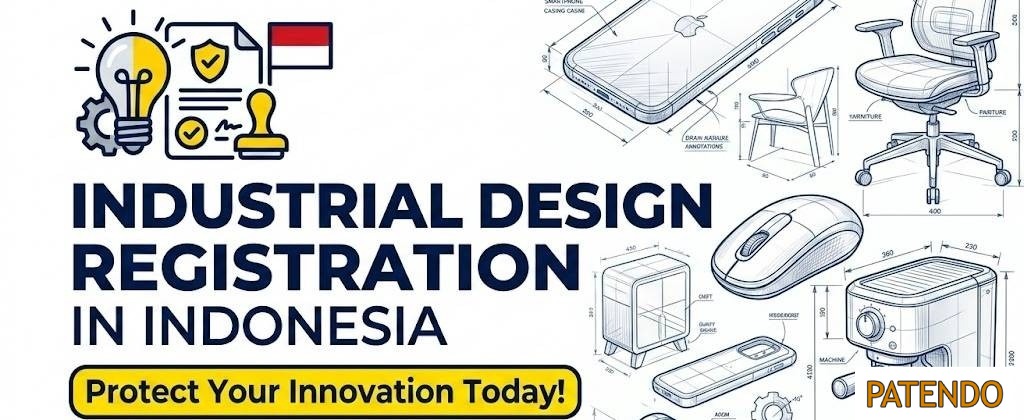
Industrial Design Registration in Indonesia is a vital strategic step for any serious business entering a highly crowded marketplace where consumers increasingly buy based on visual appeal. We must acknowledge the modern reality of commerce. The physical aesthetic of a product is just as valuable as its internal technical function. Consumers are naturally drawn to beautiful packaging, sleek contours, and unique visual identities. Recognizing this immense commercial value, the national legal framework established Law No. 31 of 2000 on Industrial Designs to serve as the governing structure that protects the visual appearance of products in the domestic market.
Securing your design rights is not merely an optional luxury for large corporations. It operates as a critical commercial shield against copycats, counterfeiters, and aggressive industry rivals who are waiting to capitalize on your hard work. In this comprehensive guide, we will explore the critical topics you must understand, including the precise definition of an industrial design, the absolute novelty requirement, the step by step filing process, and powerful enforcement strategies.
Users investigating this topic generally have one of three primary search objectives. Some users have informational intents, seeking to understand what legally qualifies as an industrial design, specifically that it must be entirely new and possess clear aesthetic value. Other users focus on procedural aspects, seeking a reliable guide on how to navigate the complex government filing systems. Finally, many business owners have commercial intents, looking for the costs involved, the duration of protection, and actionable methods on how to enforce their legal rights against counterfeiters.
Understanding what is actually protected under the law is the foundational step for any creator. The legal framework specifically protects the shape and configuration, the unique pattern and lines, or the specific color composition that gives a product its distinctive visual identity. This broad definition applies to both Two-dimensional and three-dimensional designs. Whether you are protecting the sleek curve of a custom glass bottle, the overall industrial product appearance of a modern piece of furniture, or the intricate details found in handicrafts and packaging aesthetics, these visual elements hold massive financial value.
You must remember that Indonesia operates on a strict first to file reality. Priority for protection belongs exclusively to the very first applicant who successfully submits their documents, not necessarily the original creator who conceptualized the idea. If a competitor files your design before you do, they will own the legal rights to your creation.
Securing an official certificate from the Directorate General of Intellectual Property (DGIP) exponentially increases your corporate valuation. It provides tangible proof of ownership that investors demand. Furthermore, it opens exclusive doors for lucrative commercialization. Registered rights allow for safe commercial exploitation through manufacturing agreements, franchising, and licensing deals.
Most importantly, this registration acts as an impenetrable anti copycat shield. Registered rights empower businesses to swiftly stop competitors from producing visually identical knockoffs that confuse loyal consumers and undercut market prices. According to the World Intellectual Property Organization, securing Intellectual Property Rights (IPR) for designs significantly boosts a company's market competitiveness and overall profit margins.
The most critical hurdle for any applicant entering this process is the strict novelty requirement. In Indonesia, a design is only registrable if it is not the same as any design previously disclosed to the public anywhere in the world. This uncompromising global standard ensures the true originality of design.
Why is novelty so critical in the registration workflow? If a design is already known to the public, it belongs to the public domain and cannot be monopolized by a single entity. Creators must remain highly vigilant against the social media trap. You must never publish your digital renders, prototypes, or product photos on platforms like Instagram, LinkedIn, or crowdfunding sites before filing your official application. Doing so instantly destroys the legal novelty required for registration.
However, the legal system does provide a very narrow six month grace period for specific situations. This exception allows a design to be exhibited at an official national or international exhibition without losing its novelty status, provided the formal application is filed within exactly six months from that exhibition date. Finally, you must clarify the boundary between aesthetic design and technical utility. Purely functional features, such as how a machine operates internally, cannot be protected here. They must be protected by a patent.
The formal registration workflow for industrial designs is considerably more rigorous than standard copyright protection because it involves a mandatory publication period where independent third parties can actively oppose your registration.
Before initiating the process of filing an industrial design application, applicants must conduct a highly detailed prior art search. By utilizing the DGIP local records and the WIPO global design database, you can verify that your specific aesthetic has not already been registered by someone else.
To secure an official filing date, applicants must fulfill strict mandatory requirements regarding physical representation. You must provide high quality, professional drawings, crisp photographs, or accurate digital renders of the design from multiple distinct angles. These angles typically include the front, back, top, bottom, left side, right side, and a comprehensive perspective view.
Submitting the application requires compiling specific legal documents. You must provide a clear description of the design, which is a written explanation detailing the aesthetic features being claimed for protection. A statement of ownership is also required as a formal legal declaration that the applicant is the rightful owner and creator. A Power of Attorney is absolutely mandatory if the applicant is a foreign corporate entity or if they are utilizing a local registered IP consultant. Furthermore, if the design was first filed in another participating country within the last six months, you can submit a priority document to secure a priority right claim based on Paris Convention priority. Foreign applicants can also utilize the Hague System for International Registration to streamline their application process across multiple countries simultaneously.
Once submitted, the intellectual property office will conduct a formal administrative examination to verify that all submitted documents and visual representations meet the statutory standards. If the paperwork is complete, the application enters the official publication period. This is a mandatory three month window published in the Official Gazette, which triggers the opposition and rebuttal period where any third party can file formal objections against your application.
Uniquely within this specific legal framework, a substantive examination phase is only conducted by the government examiners if a formal opposition is filed by a third party during the publication window. If no one opposes your application, it bypasses the substantive check and proceeds straight to the final certification stage, culminating in the issuance of the prestigious Certificate of Industrial Design.
Once your application is successfully approved, the exclusive rights of the designer are granted, but they are strictly limited in time. The recognized right holder and creator receives a solid 10-year protection period. This exact time frame is calculated directly from the official filing date, not from the date the certificate is eventually printed.
According to the Indonesian Ministry of Law and Human Rights, this specific duration successfully balances the creator's need for a return on investment with the public's right to eventual access.
You must take careful note of a crucial difference between this protection and standard trademarks. An industrial design is a Non-renewable intellectual property. There is absolutely no renewal mechanism available under current national law. Once the ten year period expires, the design automatically enters the public domain. This legal expiration allows anyone in the market to manufacture, distribute, and sell products utilizing that specific design freely without seeking permission or paying royalties.
Holding a valid certificate grants you the immense legal power to fight back forcefully against industrial design infringement. If you discover counterfeit products in the market, the standard initial step to halt unauthorized manufacturing or distribution is drafting and sending a formal Cease and Desist Letter, widely known in the local jurisdiction as a Somasi.
If the infringing party ignores your official warning, you are fully empowered to pursue aggressive civil litigation. Taking the commercial dispute directly to the Commercial Court allows you to legally claim financial damages for lost profits and request court orders to seize and destroy the counterfeit goods. In cases of bad faith registrations by competitors, you can also initiate a cancellation of registration lawsuit through the court system to invalidate their unlawful certificates.
The national law also outlines severe criminal prosecution avenues. Willful infringement carries heavy criminal penalties, including substantial financial fines and lengthy imprisonment for the worst offenders.
Alternatively, if you prefer to monetize your visual assets without manufacturing the goods yourself, your registered rights allow you to execute a highly profitable transfer of rights agreement or a commercial licensing contract. According to Patendo, having a registered IP consultant negotiate these commercial agreements ensures your financial interests are fully protected under national law. According to the University of Indonesia Faculty of Law, establishing a solid legal foundation before entering the market is the most effective way to deter potential infringers from targeting your brand.
1. Can I protect the technical function of my product with an industrial design? No. Technical functions, mechanical movements, and utility improvements must be protected through a standard patent application. Design registrations strictly protect only the aesthetic and visual external elements.
2. Does registering my design in Indonesia protect me in other countries? No. Intellectual property rights are inherently territorial. A local registration only protects you within the borders of Indonesia. You must file separate national applications in each target country or use international filing systems to secure broader global protection.
3. Can foreign businesses apply directly for a design patent in Indonesia? No. Foreign individuals and international corporate entities must use a locally registered IP consultant to submit their applications, translate documents, and act as their official legal proxy.
4. How long does the entire registration process typically take? Assuming there are no third party oppositions filed during the official publication phase, the entire administrative process from the initial filing to the issuance of the certificate usually takes between 12 to 18 months.
5. What happens if someone copies only a small part of my design? Infringement is evaluated based on the overall impression. If the overall visual impression of the competing product is substantially similar to your protected design, causing the average consumer to be confused, it constitutes legal infringement.
6. How strict is the novelty requirement in reality? The requirement is absolute and unforgiving. Even a casual post on a personal blog, a quick showcase at a local community fair, or an early product teaser video published before your filing date can completely destroy your legal claim to absolute novelty.
In today's highly competitive, visual first market, protecting the physical aesthetics of your product is a non negotiable business strategy. An Industrial Design Registration in Indonesia guarantees that your creative hard work translates directly into exclusive market dominance and long term profitability.
According to Patendo, proactive registration is the most cost effective insurance for your brand's physical identity in the modern marketplace. Do not wait until a well funded copycat steals your hard earned market share and dilutes your brand value. Take immediate action to secure your creative assets. Contact our experienced Registered IP Consultants at Patendo today to conduct a comprehensive novelty search and file your designs safely before you launch your next big product.
Patendo is a Registered Intellectual Property Consultant appointed and sworn in by the Minister of Law and Human Rights, providing services for the renewal and registration of patents, trademarks, copyrights, and industrial designs.




Address :
PATENDO, Satrio Tower Level 16, Jl. Prof DR Satrio Kav C4, South Jakarta 12950
Whatsapp :
+6281291677495
Closed on Sundays and national holidays
Email :
cs@patendo.co.id
Working Hours :
08.00 – 16.30 WIB
Break Time :
12.00 – 01.00